

Diet Exercise and Lifestyle in the Workplace
Only 41% of people in Ireland meet the National Physical Activity Guidelines, and an Irish desk-based intervention recorded 8.39 hours of work per day, of which 6.52 hours were sedentary. If you work at a screen, the problem usually isn't effort, it's that the workday is built to keep you still.
The Reality of the Sedentary Desk Worker
Irish guidance treats desk work as sedentary by definition, and that matters because sitting, reclining, and lying at low energy expenditure all count towards the same daily total. The HSE notes that most adults in Ireland spend at least 5 hours a day in sedentary activity, which matches what many office workers already feel in their bones, the day fills up with calls, tabs, emails, and meals at the same desk where the work happens. HSE guidance on sedentary behaviour
The gap is not a character flaw. Irish workplace research shows how concentrated sitting can be, with 66% of staff in one healthcare audit saying they sat at their desk for most of the day and 63% reporting 5 to 7 hours of sitting at work. In another Irish survey, the average person sat 7.3 hours on weekdays, so the modern desk-bound routine is not unusual, it's common. Irish workplace health evidence
Practical rule: if the workday is already taking most of your waking hours, health advice has to fit inside that reality, not compete with it.
That is why diet plus exercise is the only serious framework for body composition and energy at work. Diet changes control intake, movement changes output, and the two together are what create a sustainable deficit. If lunch choices are inconsistent, a useful starting point is a simple workplace-friendly snack plan, like the ideas in Gym Snack's healthy snacks to keep at work, because the best programme is the one you can realistically follow on a busy day. For a broader workplace angle, the practical logic is the same as in sedentary lifestyle solutions, movement has to be built into the day, not bolted on after it.
The point isn't that willpower has failed. The point is that the environment is winning unless you design around it.
Understanding Sugar-Hungry Metabolic Exercise
A productive workplace exercise strategy should do more than burn time. It should use muscle activity that is easy to sustain, fits around calls or focused work, and nudges the body towards using readily available fuel rather than asking for a full gym session before lunch. That is the appeal of electrical muscle stimulation, or EMS, when it is used as a structured form of exercise rather than a novelty.
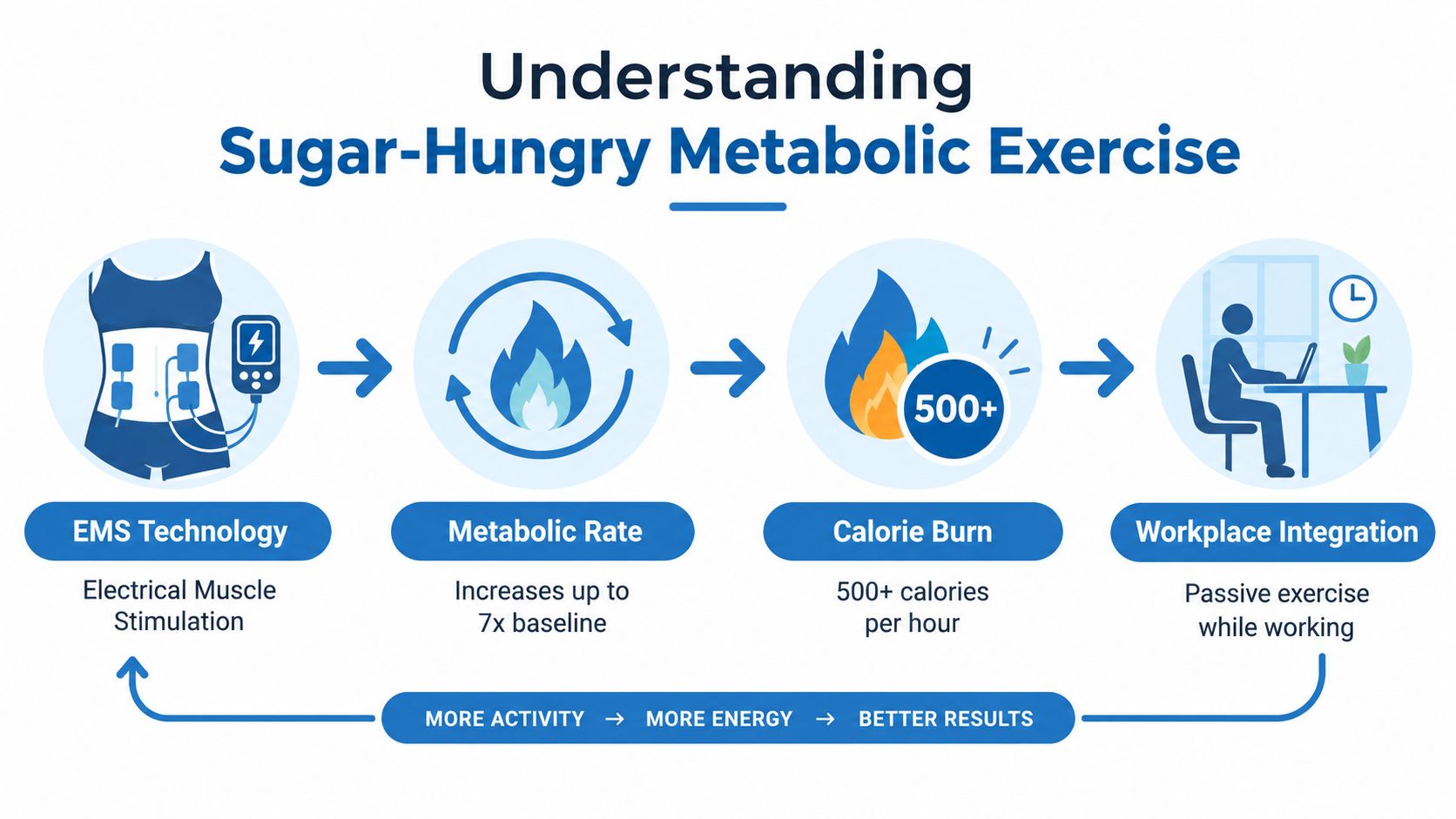
EMS can mimic the body's shivering response, which is one reason it's described as a sugar-hungry form of exercise. The practical idea is simple, the muscles are being repeatedly recruited, heart rate rises, and the work feels like exercise rather than passive sitting. For people using low-carb, keto, or intermittent fasting approaches, that matters because the metabolic goal is often to keep activity compatible with the day's eating pattern rather than disrupt it.
The most useful exercise is often the one that doesn't force a complete schedule reset.
That's where the workplace framing becomes useful. Irish guidance recommends breaking up prolonged sitting and building movement into the day, and European occupational advice goes further by linking practical break mechanics to lower fatigue and less static strain. Irish sedentary behaviour guidance European workplace break guidance In other words, the goal is not to wait for a “proper workout window”, it's to make movement part of the working pattern.
A device like BionicGym fits that logic because it's designed to deliver exercise while you're seated, working, or gaming. BionicGym's sugar-hungry exercise overview It's not a substitute for every kind of training, and it shouldn't be sold as magic, but it does solve a real problem for desk workers, consistent movement without needing to leave the desk.
The Power of Passive Calorie Burn and Cumulative Deficits
Most workplace fitness advice over-focuses on step counts because they're easy to count, not because they solve the whole problem. For a desk worker, the bigger issue is usually the long stretch of low-output time between breakfast and dinner, and that's where cumulative burn can matter more than a single short session.
If you can sustain exercise in a low-friction way during the day, the mathematics change. BionicGym's materials position typical vigorous use at about 500 calories per hour, and long sessions spread across the day can accumulate into a much larger total than a brief gym visit. That's the part many office wellness plans miss, the body responds to what happens repeatedly, not just to one perfect workout. Cumulative calorie burn and weight loss
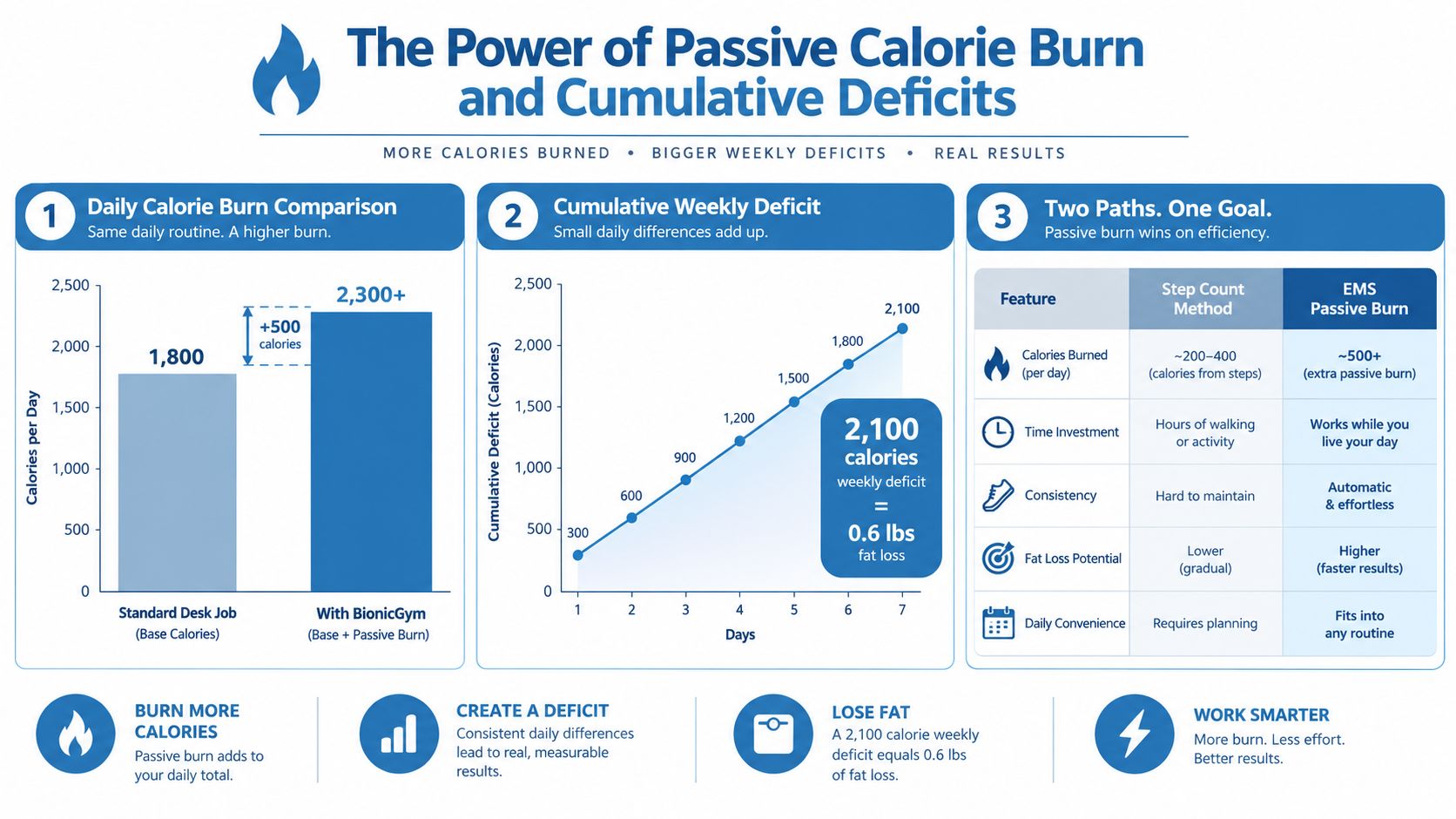
The advantage is not that every day becomes a workout day in the traditional sense. It's that exercise stops being a separate event and becomes part of the background infrastructure of the workday. That matters for people who are time-poor, parenting, commuting, hybrid-working, or unable to protect an hour for the gym.
What works: frequent, low-friction movement that can be sustained.
What usually fails: plans that depend on perfect motivation at the end of a long day.
This is also why the diet plus exercise message has to stay central. If intake stays high, passive burn won't rescue the result. But if someone is already tightening food choices and using their work hours more intelligently, then cumulative movement can make the whole plan more realistic, especially when the office day is already fixed and the challenge is to make it less sedentary. For readers exploring that angle, how to boost metabolism and energy is a useful companion resource because it reinforces the same practical point, sustainable energy management beats one-off intensity.
The punchline is simple, exercise doesn't have to feel like a separate life project to matter.
Choosing the Right Device for Your Goals
The right device depends on what you need from it, because workplace exercise isn't one-size-fits-all. Some people want a gentle background session that fits into admin work and remote calls, while others want a harder conditioning session that feels closer to training than movement.
The Standard version suits lower-intensity, sustained use. The PRO+HIIT version is for people who want more aggressive intervals and a harder cardio feel. If the goal is to stay active through a long workday without feeling wiped out, the Standard tier makes more sense. If the goal is a more intense workout stimulus, the PRO+HIIT option fits better.
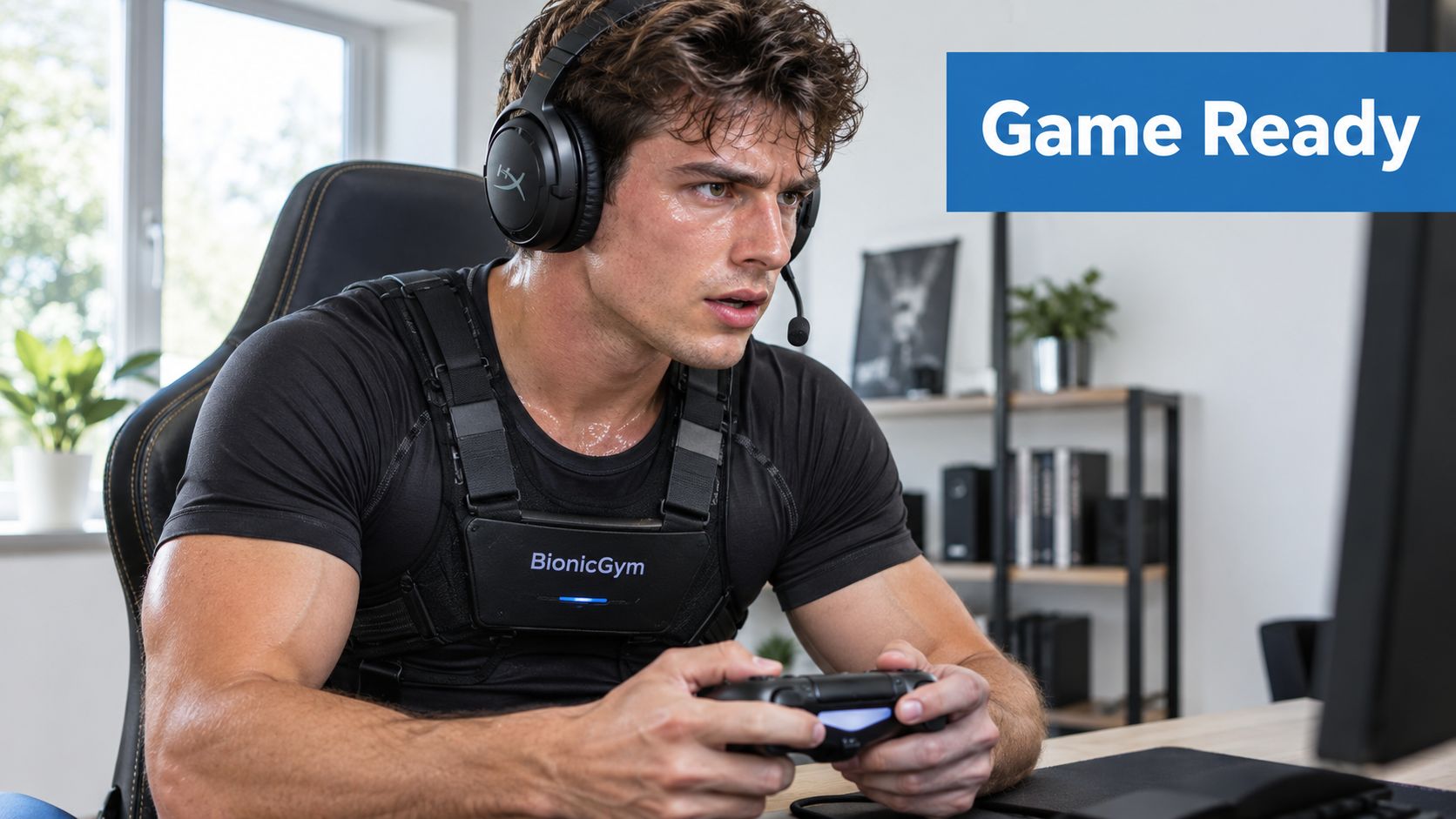
The important thing is not to confuse intensity with visibility. A real workout should feel like one, and with this kind of device that means the user should look warm, exerted, and physically engaged rather than artificially relaxed. Office exercise equipment guidance That is the difference between a gimmick and actual training stimulus.
The product also has to match the way people work. If the task is gaming, emails, or desk work, the setup needs to be discreet enough to fit the environment, but still strong enough to create a meaningful exercise effect. A short demo can be more useful than a long explanation, which is why this video is worth a look.
A useful benchmark is whether the device changes the session, not just the mood. If you're choosing between options, choose the one that matches your actual workday, because the best device is the one you'll use consistently.
Real-World Applications for Gamers and Professionals
A desk-bound professional doesn't need a new identity to get healthier. They need a method that works while the job is happening, which is why the best workplace fitness habits are the ones that disappear into normal routines instead of fighting them.
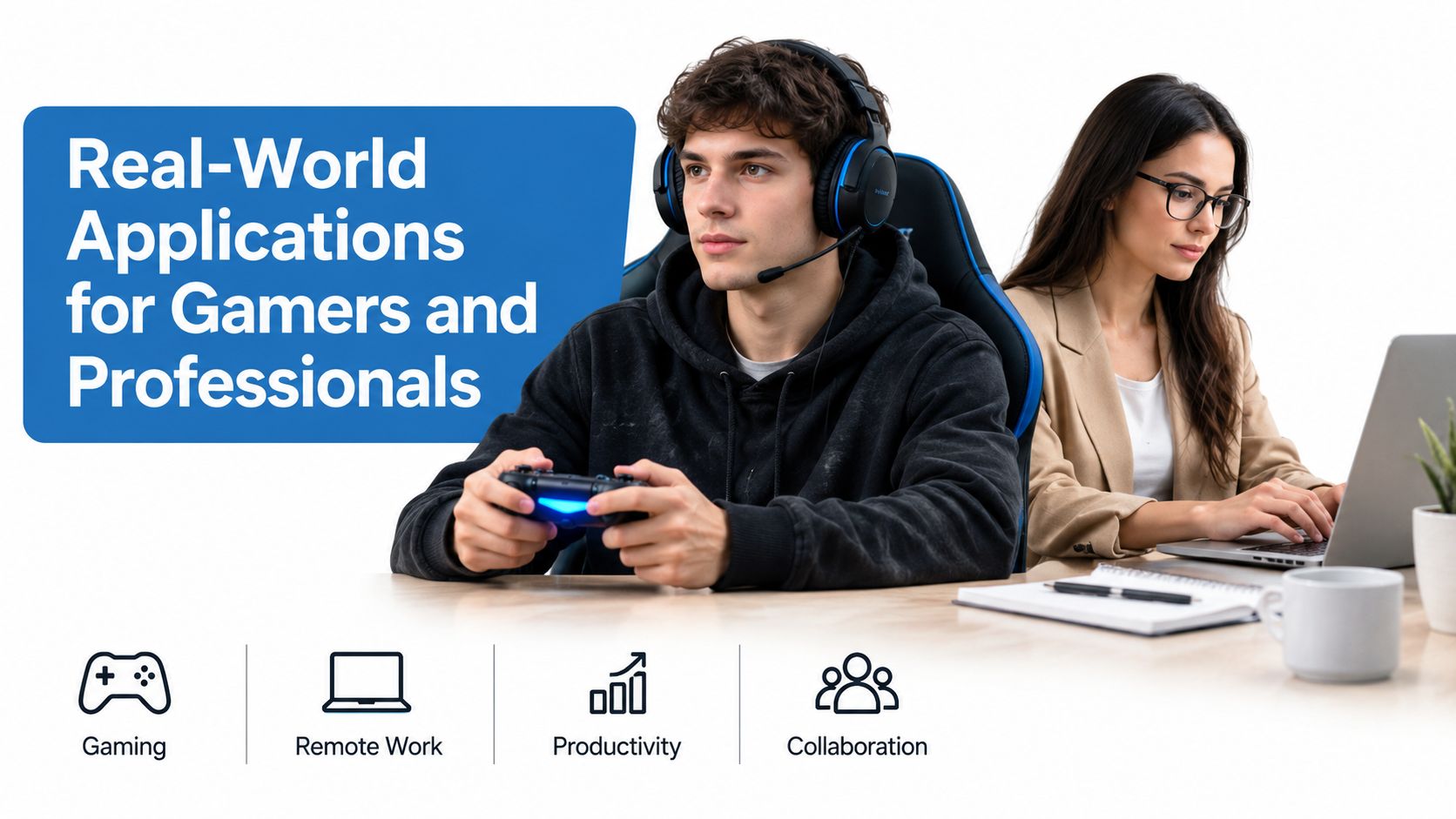
For gamers and remote workers, that can mean a session during play, while answering messages, or while doing light admin. For office staff, it can mean using a movement-based setup during a reading block or a meeting that doesn't need camera-facing perfection. The value is not in dramatic disruption, it's in making sitting less total and less passive.
There are also use cases where low impact matters more than speed. People with arthritis or joint sensitivity often want cardio without loading the joints, and the same logic applies to users who can't tolerate a lot of pounding. In those situations, a no-impact approach can be a better fit than trying to force running or high-impact classes into a body that doesn't want them.
When weight loss medication is part of the picture, the goal shifts again. People using GLP-1 medicines like Ozempic or Wegovy often worry about losing lean mass as they lose weight, so exercise remains important as a support for muscle retention. Anybody with a serious medical condition or injury should consult with their medical practitioner before starting any new exercise program. BionicGym is a great way to exercise. It is not a medical treatment. Consult your doctor if you have a serious condition.
The most realistic workplace plan is the one that respects fatigue, pain, and time limits instead of pretending they don't exist.
That's where this category stands out from generic wellness advice. It doesn't ask the user to leave their life behind for 45 minutes, it fits inside the life they already have. For people who want to compare the multitasking angle with other practical use cases, multitasking fitness for gamers is a natural next read.
Building Your Personalised Diet and Lifestyle Blueprint
A workable workplace blueprint starts with food, because weight loss still depends on intake. Once the diet side is honest, the exercise side becomes a tool for creating a larger deficit and protecting momentum on the days when the office schedule is crowded and energy is low.
That's why a useful plan combines meal structure, movement structure, and consistency. A lighter lunch, better snacks, and a realistic movement setup will do more for someone than a single heroic gym session they can't repeat. If you want a simple way to think about the energy side of the equation, the calculator on the product site helps keep expectations grounded and makes the trade-offs visible before you buy into another wellness promise.
A good workplace plan also needs to respect the limits of motivation. If the day is long, the commute is stressful, or the home office has become a second sitting zone, then the answer isn't more guilt. It's a system that makes movement easier to repeat, and that system should be paired with a diet you can live with rather than one you can only tolerate for a week.
The best plans are modest at the start. Use the food choices you can repeat, use the movement method you won't avoid, and build from there instead of trying to overhaul everything at once.
Good rule: if a change can't survive a rough Tuesday, it's probably too fragile to base a long-term result on.
For people trying to understand the workplace wellness side more broadly, the bigger lesson is that healthy habits are not isolated behaviours. Diet, exercise, sleep, commute friction, and desk time interact, and the most effective workplace strategy reduces friction across all of them rather than chasing one perfect habit.
A useful place to start is to keep your nutrition simple, use a movement strategy that fits your workday, and then test whether the routine is sustainable over time. That's the practical version of workplace wellness, not a slogan.
If you're serious about making your workday less sedentary, visit BionicGym and see how a desk-friendly exercise setup can fit around your actual schedule. It's built for people who need diet, exercise, and lifestyle changes to work together, not compete with the rest of the day.