

Aerobic Fitness Program That Actually Works in 2026
Ireland's national weekly target is 2 hours 30 minutes to 5 hours of moderate aerobic activity, or 1 hour 15 minutes to 2 hours 30 minutes of vigorous activity. An effective aerobic fitness program is a structured way to reach that volume consistently, without creating avoidable injury or recovery problems.
You may be reading this after another day at a desk, with a full calendar, stiff hips and the familiar intention to “get fit next week”. The difficulty usually isn't knowing that cardio matters. It's finding a format you can repeat through commuting, winter weather, family commitments, joint sensitivity or a workday spent almost entirely seated.
For Irish adults, the practical question is not whether running is the perfect answer. It's how to accumulate enough useful aerobic work, at an appropriate intensity, to improve fitness and support health. Walking, cycling, swimming, gym training and seated electrical muscle stimulation can all play a role, provided the session is challenging enough and the weekly load is progressed sensibly.
What an Aerobic Fitness Program Has to Deliver
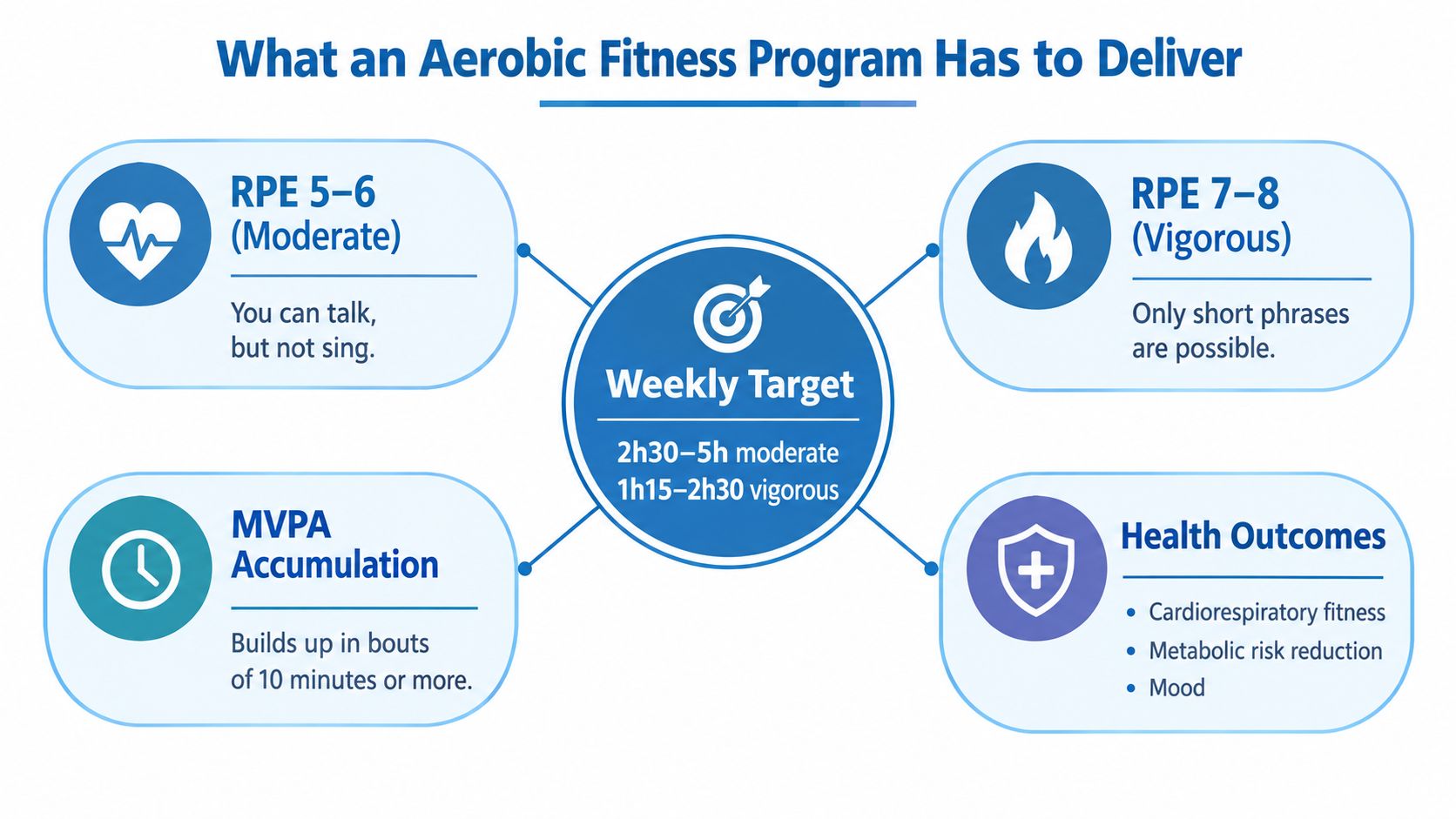
The Irish public-health anchor is clear. Adults should build towards 2 hours 30 minutes to 5 hours of moderate-intensity aerobic activity each week, or 1 hour 15 minutes to 2 hours 30 minutes of vigorous activity, with inactive adults starting small and progressing gradually, as outlined by the HSE physical activity guidance. Walking, running, cycling and swimming can all qualify. The format matters less than the intensity, duration and consistency.
Intensity is easiest to manage with three checks:
- Moderate effort: Borg RPE 12 to 14, or roughly 40% to 59% of heart-rate reserve. You can talk in sentences, but singing becomes uncomfortable.
- Vigorous effort: Borg RPE 15 to 17, or roughly 60% to 84% of heart-rate reserve. You can manage short phrases, but conversation is no longer comfortable.
- Heart-rate reserve: Use your resting and maximum heart rate to set a personal range rather than copying someone else's beats per minute from a watch.
Short bouts can contribute when they last at least 10 minutes, which makes a busy-day plan more realistic than the old assumption that every session must occupy a single uninterrupted block. A useful independent resource on cardio health assessment advice can help you think through baseline fitness, symptoms and appropriate testing.
The physiological return
A well-built plan should improve VO2max, the amount of oxygen your body can use during demanding exercise. It should also support adaptations such as greater capillary density and stroke volume, allowing muscles to receive and use oxygen more efficiently. For someone reducing body weight, regular aerobic work should sit alongside resistance training and adequate nutrition, helping preserve lean mass rather than turning every session into an exhausting calorie chase.
The most useful outcome measures are practical. Track a repeatable walk, cycle or seated session, your RPE at a known workload, and your resting heart rate under similar conditions. A fitter person often completes the same work with less breathlessness and a lower perceived effort. Those changes are more trustworthy than a single watch estimate or a photograph taken in a gym mirror.
For a device-based option, proven cardio exercise guidance from BionicGym describes how app-guided leg wraps can create a demanding cardio session while seated. It should be treated as training, not a shortcut. Gains depend on actual use, suitable intensity and steady progression.
Why Most Irish Readers Under-Dose on Aerobic Activity
Ireland's activity data describes a large adherence problem. The Healthy Ireland Survey 2019 found that 46% of adults met recommended physical activity guidelines, compared with 44% in 2015, while 8% reported no physical activity in the previous seven days. HSE guidance also reports that most adults spend at least 5 hours a day sedentary, so a programme that adds one demanding workout but leaves the rest of the day motionless may miss an important part of the problem. The figures are summarised in Ireland's Every Move Counts update.
| Activity Band | Weekly Target | % Irish Adults Hitting |
|---|---|---|
| Moderate aerobic activity | 2 hours 30 minutes to 5 hours | 46% met recommended guidelines in 2019 |
| Vigorous aerobic activity | 1 hour 15 minutes to 2 hours 30 minutes | No comparable percentage is stated in the verified national data |
| Any reported activity | Sport or physical exercise | 72.5% in the 2025 monitoring summary |
The 2025 Irish Sports Monitor summary reported 2,966,000 people, or 72.5%, participating in at least one sport or physical exercise, while gym-based activities were the most common activity among 15- to 24-year-olds at 28.1%. That participation figure is encouraging, but it doesn't mean every participant is accumulating enough vigorous work to improve high-end aerobic capacity. A separate Sport Ireland report found 39% of the population was highly active in 2023, representing around 1.6 million adults meeting the national guidelines through sport and recreational walking alone. These figures show participation and compliance are related, but not identical.
The desk-bound failure modes
Long sitting periods remove easy movement that used to come from walking between locations, standing tasks and active commuting. Remote workers can finish a full day with a reasonable step count on paper but very little sustained work at a heart rate that challenges aerobic capacity. Generic advice often says “walk more” without addressing people who can't walk briskly for long enough, don't enjoy gyms or need a vigorous alternative that fits around work.
A workable plan needs five qualities: specificity, so it includes both an easier aerobic base and occasional harder work; progressive overload without unnecessary joint punishment; recovery days; an option people still enjoy in February; and measurement through RPE, session duration and resting heart rate. The best diet and exercise plan guidance is useful only if it becomes a routine you can repeat.
Designing Your Aerobic Fitness Program Step by Step
Start with the constraint rather than the equipment. A desk-bound worker may need short sessions that fit between meetings. Someone seeking low-impact training may need seated or water-based work. A person returning after a medical diagnosis or injury needs professional clearance and a slower entry point. Anyone with a serious medical condition or injury should consult with their medical practitioner before starting any new exercise program.
Choose the template
Select the starting point that matches your actual life:
- Desk-bound: Use short, repeatable sessions during seated work, then add walking or cycling where practical.
- Low-impact: Combine swimming, water walking, cycling or seated exercise to reduce joint loading.
- Keto or fasting: Place harder sessions in a fed window if fasted work causes dizziness, poor output or unusual fatigue.
- Rehab return: Keep the initial effort controlled, monitor symptoms and increase frequency before duration or intensity.
The second decision is frequency. An inactive adult may begin with three sessions per week, then build towards five if recovery is good. Frequency creates the habit and gives the cardiovascular system repeated exposure without asking an unconditioned body to tolerate a heroic single session.
Build duration before intensity
Begin with sessions of 15 minutes, extend them to 30 minutes, then work towards 45 minutes as tolerance improves. That progression gives the heart and lungs, muscles, tendons and connective tissues time to adapt together. The HSE and National Physical Activity Framework specifically supports progressing frequency, duration and then intensity for inactive adults.
Only add vigorous work once the duration is stable. For a person who can complete regular moderate sessions comfortably, one vigorous block every 7 to 10 days can be a cautious starting point. A seated electrical muscle stimulation system can fit here for people who can't run or row, but the heart-rate response must be observed rather than assumed. The sequence remains frequency, duration, intensity. Reversing it is how minor soreness becomes a programme-ending flare-up.
For practical programming ideas, how to improve aerobic fitness can sit alongside conventional walking, cycling and swimming plans. The useful question is always whether the chosen method produces the intended effort and whether you can recover well enough to repeat it.
Four Aerobic Fitness Program Templates for Real Lives
These are starting points, not prescriptions. They need adjusting for training history, symptoms, sleep, work demands and access to equipment. Anyone returning from a cardiac, pulmonary or metabolic diagnosis should clear progression with a clinician first.
| Profile | Weekly Frequency | Session Length | Intensity (RPE / %HRmax) | Electrical Stimulation Role | Key Constraint |
|---|---|---|---|---|---|
| Desk-bound worker | 3 to 5 sessions | 10 to 30 minutes | RPE 12 to 17, according to tolerance | Short seated vigorous blocks between tasks | Sitting time and unpredictable meetings |
| Low-impact trainee | 3 to 5 sessions | 20 to 45 minutes | RPE 12 to 15 | Seated work alongside water walking or cycling | Joint comfort and impact tolerance |
| Keto or time-restricted fasting | 3 to 5 sessions | 15 to 45 minutes | RPE 12 to 16 | Harder work in a fed window when needed | Energy availability and hydration |
| Rehab or chronic-condition return | Begin with frequent short sessions | Up to 20 minutes initially | Under RPE 6 at first | Only after clinical clearance | Symptoms, flare-ups and safe progression |
Desk-bound workers need a plan that survives meetings. Three 12-minute seated blocks can be spread through a working day, with heart rate checked during the harder portions. Light emails or television are reasonable pairings, but driving, stairs, hot drinks and dangerous equipment are not safe settings for exercise equipment.
Low-impact trainees can combine water walking with seated electrical muscle stimulation. Someone with arthritis or a joint injury must use the medical disclaimer: BionicGym is a great way to exercise. It is not a medical treatment. Consult your doctor if you have a serious condition. People looking for supportive footwear can also browse aerobic exercise insoles, although insoles won't replace progressive cardiovascular training.
Keto and fasting users should judge output, not ideology. Vigorous work can feel markedly different when glycogen availability is low, so a post-meal or otherwise fed window may produce better quality and fewer symptoms. A sugar-hungry form of exercise may be relevant to people interested in carbohydrate use, but it doesn't remove the need for a balanced diet, hydration or sensible recovery.
Rehab returners should keep early sessions at or below RPE 6, cap them at 20 minutes and increase frequency before duration. A person with diabetes, recent surgery or an active injury needs the same disclaimer: Anybody with a serious medical condition or injury should consult with their medical practitioner before starting any new exercise program. The low-impact cardio workout for beginners resource can provide ideas, but it isn't a substitute for individual assessment.
Making Short Sessions and Background Workouts Count
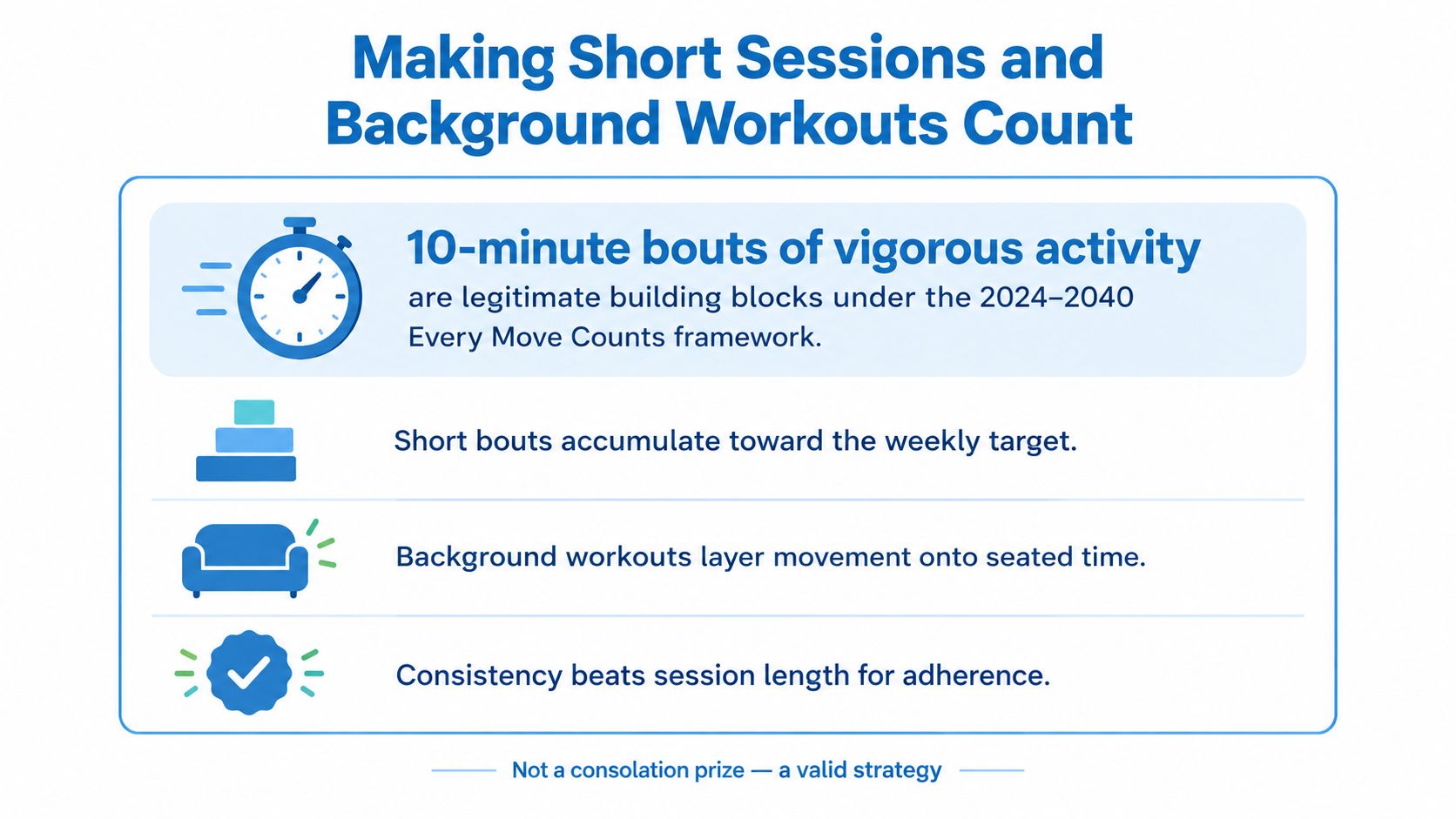
Ten-minute bouts aren't consolation prizes. Ireland's national guidance recognises that shorter bouts can contribute when they last at least 10 minutes, which makes them legitimate building blocks for people whose day is fragmented. The point is to accumulate enough work to create a repeatable weekly stimulus.
Three seated sessions of 12 minutes across a working day create 36 vigorous minutes. Repeating that pattern across a five-day working week creates 3 hours of vigorous activity, which is above the national weekly vigorous floor of 1 hour 15 minutes. That arithmetic is useful, but only if the sessions reach vigorous effort and you can monitor how you respond.
Practical rule: Pair a demanding session with light desk work, not a cognitively intense meeting where you'll ignore breathlessness, heart rate or poor technique.
Background movement can then fill the moderate band. Walking meetings, cycling for a short commute, household chores and purposeful trips all help reduce the amount of uninterrupted sitting. The 2025 monitoring summary also shows why relying on one activity alone is fragile. Recreational walking fell by 4 percentage points, and that decline was identified as the main driver of the drop in highly active adults from 40% to about 38%. For some people, a second route to vigorous work is more dependable than hoping walking remains consistent year-round.
Avoid placing vigorous electrical stimulation in the 60 minutes after heavy resistance training. The lower limbs may already be fatigued, and the extra demand can reduce recovery quality. Use easier sessions on those days, and keep the longer background blocks for times when you can pay attention to how you feel.
For ideas about fitting movement around remote work, see passive calorie burn for remote workers. Nutrition still matters, especially on rest days, so balanced nutrition for rest days should support, not replace, a complete eating pattern.
The accompanying demonstration shows how seated exercise can fit into ordinary routines:
Progressing Safely Across Four Weeks
A four-week cycle gives you enough time to observe patterns without pretending that fitness changes after one impressive session. Record session duration, RPE, symptoms and resting heart rate under similar conditions. Progression is measured in weeks, not individual workouts.
The four-week build
- Week 1, establish: Use the chosen template at a comfortable baseline. Keep intensity controlled and log how you feel later that day and the following morning.
- Week 2, add frequency: Add one short session, rather than making every existing session harder. The purpose is to increase exposure while preserving recovery.
- Week 3, extend duration: Add 5 minutes to two established sessions. Keep intensity broadly unchanged so you can identify whether the extra volume is tolerated.
- Week 4, introduce intensity: Add one vigorous block while holding overall volume flat. If the person is not ready, repeat Week 3 instead.
This sequence reflects the Irish guidance for inactive adults and those living with chronic conditions, which recommends increasing frequency, duration and intensity gradually. People with diabetes are encouraged to be active on most days, and the HSE notes that benefits related to glucose control and insulin sensitivity last only for a limited period after each activity bout. BionicGym is an excellent form of exercise, which is a pillar of treatment for metabolic health. It is not a medical treatment. Consult your doctor if you have a serious condition.
Use a deload or hold when three consecutive sessions exceed the intended RPE, resting heart rate rises by more than 10%, or joint pain persists beyond 24 hours. Chest discomfort, unusual breathlessness at low load, dizziness or pain that alters your gait are reasons to stop and seek clinical advice, not reasons to push through.
Repeat the cycle with small adjustments until you approach the upper end of the national weekly target. Some people will progress through more volume. Others will stay at a lower dose while building tolerance. Both can be sensible if the plan is consistent and symptoms remain controlled.
Safety, Disclaimers, and Aerobic Program FAQ
This article is educational and isn't a substitute for assessment by your GP, physiotherapist or other qualified medical practitioner. Anybody with a serious medical condition or injury should consult with their medical practitioner before starting any new exercise program.
Stop immediately and arrange appropriate clinical review for the following:
| Symptom During or After Session | Required Action | Urgency |
|---|---|---|
| Chest pain or pressure | Stop, seek urgent medical help | Immediate |
| Palpitations with dizziness or fainting | Stop and seek clinical assessment | Immediate |
| Unexpected shortness of breath at low load | Stop and contact a clinician | Prompt |
| Calf swelling | Stop and seek medical advice | Prompt |
| Sudden joint swelling | Stop loading the joint and arrange assessment | Prompt |
Anyone with diagnosed cardiovascular disease, uncontrolled hypertension, diabetes with neuropathy, recent surgery or an active musculoskeletal injury should obtain clearance before vigorous work, including electrical muscle stimulation sessions. BionicGym is a great way to exercise. It is not a medical treatment. Consult your doctor if you have a serious condition.
Common questions from Irish readers
Does BionicGym count as vigorous aerobic work?
It can produce a vigorous cardio response when the user reaches the appropriate heart-rate and breathlessness range. The claim must be demonstrated through response, not assumed from the product alone. BionicGym is described as an FDA-cleared medical device, not an FDA-approved drug.
How should I train during a 16:8 fast?
Keep easy work in the fasted window if it feels comfortable. Schedule vigorous sessions after a meal or in a fed window if fasting causes dizziness, unusual fatigue or a noticeable drop in performance. Anyone with a serious metabolic condition should consult their doctor before changing exercise or eating patterns.
Can I use seated exercise over a desk job without overworking my lower back?
Set up with supported posture, keep the desk work light enough to monitor your breathing, and avoid treating a long session as automatically easy. Alternate positions, use recovery days and stop if symptoms alter your posture or gait.
Is it safe with a pacemaker or during pregnancy?
Don't assume electrical stimulation is suitable. A pacemaker, pregnancy and other medical circumstances require individual advice from the relevant clinician before use.
What happens if rehab pain interrupts the schedule?
Hold the progression, return to the last comfortable dose and contact your clinician if symptoms persist, swell or change your movement. Missing a week is preferable to turning a manageable flare-up into a longer setback.
How quickly can VO2max respond?
A realistic reassessment window is 8 to 12 weeks of consistent vigorous volume, provided the person can train safely and recover. Wearable estimates can be noisy, so also track RPE, heart rate and performance at a repeatable workload.
Use the templates as starting points, then adjust the next four-week cycle according to symptoms, recovery and actual weekly minutes.
BionicGym provides an app-guided wearable cardio system designed to create leg exercise while seated, making it one possible tool for people who struggle to fit conventional cardio into an Irish working week. Visit BionicGym to review how the system works and decide whether its training format fits your aerobic fitness program.