

Diet and Exercise Plan for Weight Loss: Proven Tips
You've probably tried the familiar pattern: a stricter breakfast, a smaller dinner, a burst of enthusiasm at the gym, and then a return to normal life when hunger, fatigue, or a busy schedule wins. A workable diet and exercise plan for weight loss has to survive ordinary evenings, desk-bound work, social meals, and low-motivation days. It also needs a calorie deficit, because exercise cannot compensate indefinitely for excess energy intake.
In Ireland, weight-loss efforts already tend to combine food changes and activity. The 2022 Healthy Ireland Survey resources report that 41% of adults described their weight as normal, 35% as overweight, and 21% as obese, while 34% said they were currently trying to lose weight. Among those trying, 71% reported taking more exercise or doing more manual labour, and 53% said they were eating fewer calories. The practical question isn't whether diet and movement belong together. It's how to make both manageable enough to continue.
Why Standard Plans Often Fail Before They Start
“Eat less and move more” is directionally correct, but it's an incomplete prescription. A severe food restriction can leave you hungry, less energetic, and less willing to move through the day. If every decision depends on willpower, the plan becomes fragile long before the body has had time to adapt.
The useful distinction is between a temporary punishment and a repeatable structure. A diet that removes favourite foods, demands daily high-intensity training, and ignores sleep or work demands may create a deficit briefly. It doesn't teach you how to maintain that deficit when life becomes inconvenient.

The problem with passive restriction
People often reduce meals without changing the food environment around them. Liquid calories remain invisible, portions drift upwards at weekends, and snacks appear whenever concentration drops. At the same time, an ambitious exercise plan consumes time and recovery capacity. The result is often a cycle of restriction, fatigue, overeating, and abandonment.
A more deliberate approach creates several modest controls:
- Food structure: Build meals around protein-rich foods, vegetables, fibre, and measured sources of fat or starch.
- Movement access: Choose activity that you can perform at home, at work, outdoors, or while seated, depending on your circumstances.
- Progressive demand: Increase duration or intensity gradually instead of treating every session as a test.
- Recovery protection: Keep enough flexibility for sleep, work, family commitments, and normal social eating.
The Irish movement specialist advice on feet is useful here because comfortable, capable feet affect how readily you walk, stand, and complete everyday activity. A plan that makes ordinary movement painful has already failed at the adherence stage.
Practical rule: If your plan only works on your most disciplined day, it isn't a plan yet. Build the version you can repeat when motivation is average.
The body may also respond to prolonged restriction by increasing hunger and reducing spontaneous movement. You don't need to diagnose every fluctuation or fear normal adaptation. You do need to recognise that more restriction isn't automatically the answer. A sustainable deficit paired with regular activity gives you more levers than food control alone.
Calorie Deficit Strategies and the Fat-Loss Math
A person can follow a disciplined menu all week, then erase the deficit through sweetened drinks, generous cooking oils, alcohol, or unplanned grazing. Fat loss depends on an energy deficit, but the size and design of that deficit determine whether the routine survives ordinary life. Irish HSE-aligned guidance suggests starting at about 500 kcal per day, alongside structured activity, rather than adopting an extreme eating pattern (HSE obesity treatment guidance).
Begin with observation, not guesswork. Record meals, drinks, sauces, cooking fats, and snacks across several ordinary days. Identify the easiest reductions first, while keeping protein, vegetables, and other filling foods in place. Removing those foods early often increases hunger without making the plan easier to follow.
Build the gap without starving
Use a practical meal structure:
- Anchor the plate with protein. Eggs, fish, poultry, yoghurt, beans, lentils, or another suitable option can improve fullness.
- Add volume and fibre. Vegetables, fruit, pulses, and whole-food carbohydrate sources help meals feel substantial.
- Measure energy-dense additions. Oils, spreads, nuts, cheese, and dressings can fit the plan. Casual handfuls and unmeasured pours can erase the intended deficit.
- Keep a flexible meal. Flexibility allows for a restaurant meal or family occasion without turning one deviation into a lost week.
The BionicGym calorie-deficit guidance helps place food intake and exercise output in the same calculation. The Weight Loss Calculator can model a proposed routine and make the target more concrete. Treat its result as a planning estimate, not a promise.
For sustainable body fat reduction, accept the trade-off between speed and repeatability. An aggressive deficit may produce quick scale changes, but a moderate approach leaves more room for training quality, recovery, and normal social eating.
Why exercise belongs in the calculation
Activity raises energy expenditure and gives working muscle a reason to remain active while food intake is controlled. It also creates a useful bridge to the next metabolic question: carbohydrate-demanding sessions can work as an acceleration tool when paired carefully with low-carb eating or intermittent fasting, provided recovery and individual tolerance remain adequate.
Irish guidance recommends at least 150 minutes of moderate-intensity aerobic activity each week, plus muscle-strengthening work on 2 days for general health, according to the HSE guidance. Weight-loss-specific guidance commonly builds towards a larger activity dose, so exercise can support the deficit instead of leaving food restriction to carry the entire load.
Understanding Sugar-Hungry Exercise for Metabolic Health
Exercise intensity changes the fuel mix used by working muscle. Easier, longer activity generally draws a greater share of energy from fat, while harder efforts demand more rapidly available carbohydrate from blood glucose and stored muscle glycogen. That is the basis of sugar-hungry exercise, a form of exercise that places a strong demand on carbohydrate fuel.
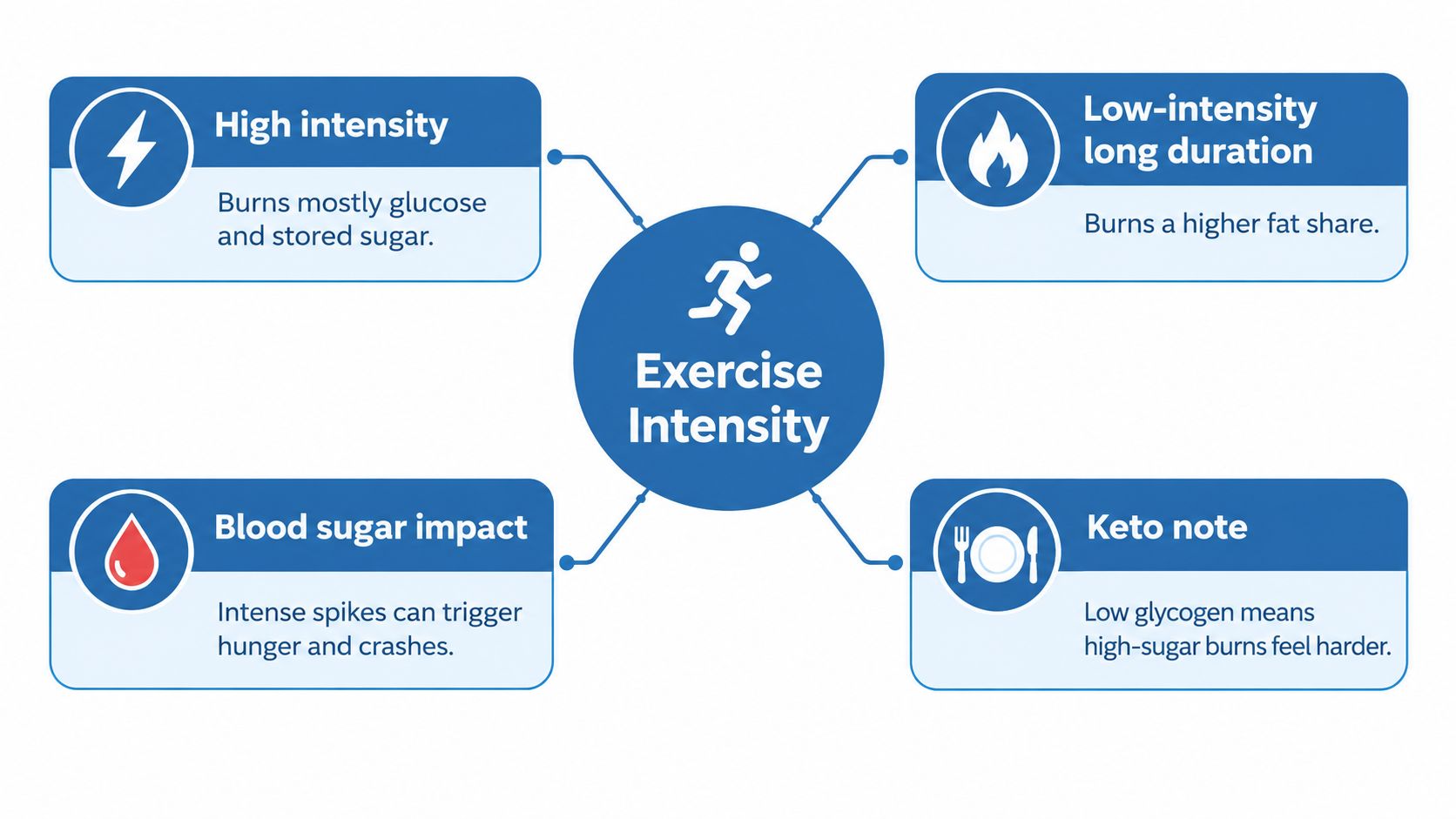
The idea is often misunderstood. Burning more carbohydrate during a session doesn't mean you've stopped burning fat for the rest of the day, nor does it make a low-carbohydrate diet automatically effective. It means the workout has a distinct metabolic demand. Your overall result still depends on total energy intake, adequate nutrition, recovery, and whether you can repeat the routine.
Where low-carb and fasting may fit
People following low-carb or ketogenic protocols often notice that very hard training feels more difficult, particularly when glycogen availability is lower. That doesn't make intense work forbidden. It means intensity, duration, meal timing, hydration, and individual tolerance need to be matched carefully.
Intermittent fasting can simplify eating for some people by reducing opportunities for unplanned snacking. It isn't a magic substitute for a calorie deficit, and it may be unsuitable for some people, particularly where medicines or medical conditions affect food timing or blood glucose.
Anybody with a serious medical condition or injury should consult with their medical practitioner before starting any new exercise program.
BionicGym can be described as a sugar-hungry form of exercise because its electrical impulses stimulate leg muscles and can create a vigorous exercise response without conventional joint loading. It was invented and developed by a medical doctor. According to its product communication, the system is FDA-cleared, not FDA approved, and its effect depends on how consistently and appropriately the user trains.
Read the detailed explanation of this sugar-hungry form of exercise before treating the concept as a shortcut. The useful application is strategic. A low-intensity session may be easier to sustain while fasting or eating low carbohydrate, whereas a vigorous session may demand more careful attention to effort and recovery.
BionicGym is an excellent form of exercise, which is a pillar of treatment for metabolic health. It is not a medical treatment. Consult your doctor if you have a serious condition.
Selecting the Right Modality for Your Lifestyle and Joints
Running, rowing, cycling, brisk walking, strength training, and electrical muscle stimulation can all serve different purposes. The right choice isn't the one with the most impressive reputation. It's the one that creates a meaningful training stimulus without causing enough discomfort or inconvenience to make you stop.
Running and jumping offer accessible, vigorous options, but they also involve repeated impact and joint movement. Cycling reduces impact but still requires equipment, space, and active leg work. Gym-based resistance training is valuable for preserving strength, although travelling to a gym can become the barrier.
Compare the trade-offs
| Modality | Main advantage | Common limitation |
|---|---|---|
| Brisk walking | Simple, accessible, and easy to scale | Time and foot comfort can limit volume |
| Running or HIIT | Efficient vigorous work | Impact, soreness, and recovery demands may be substantial |
| Cycling or rowing | Strong cardiovascular stimulus with lower impact | Requires equipment and active participation |
| Strength training | Helps maintain functional strength during a deficit | Requires technique, loading, and recovery |
| Electrical muscle stimulation | Can create exercise while seated and without conventional joint loading | Requires correct setup, gradual progression, and consistent use |
The non-weight-bearing cardio equipment guide explains why low-impact options can matter when ordinary cardio is uncomfortable. BionicGym uses wearable leg wraps and app-guided programmes to deliver electrical impulses to the muscles. It can be used while sitting, emailing, watching television, or doing household chores, but it shouldn't be used while driving, handling dangerous objects, climbing steps, crossing roads, or cycling outdoors.
Its claimed typical vigorous level should remain realistic. The communication guardrail for most users is a lower level of about 500 calories per hour, not a promise of a particular outcome. A vigorous session should look and feel like exercise, with a rising heart rate, breathlessness, and potentially sweat. If the person looks completely relaxed while the copy claims a hard workout, the message becomes less credible.
BionicGym is a great way to exercise. It is not a medical treatment. Consult your doctor if you have a serious condition.
Building a Weekly Rhythm That Maximizes Calorie Burn
A useful week alternates demand rather than treating every day as a race. Irish weight-loss guidance has described 60 to 75 minutes of moderate-intensity activity on at least 5 days each week, while another Irish guide gives a similar weight-loss range and notes that individual needs differ (Diabetes Ireland weight-management guide).
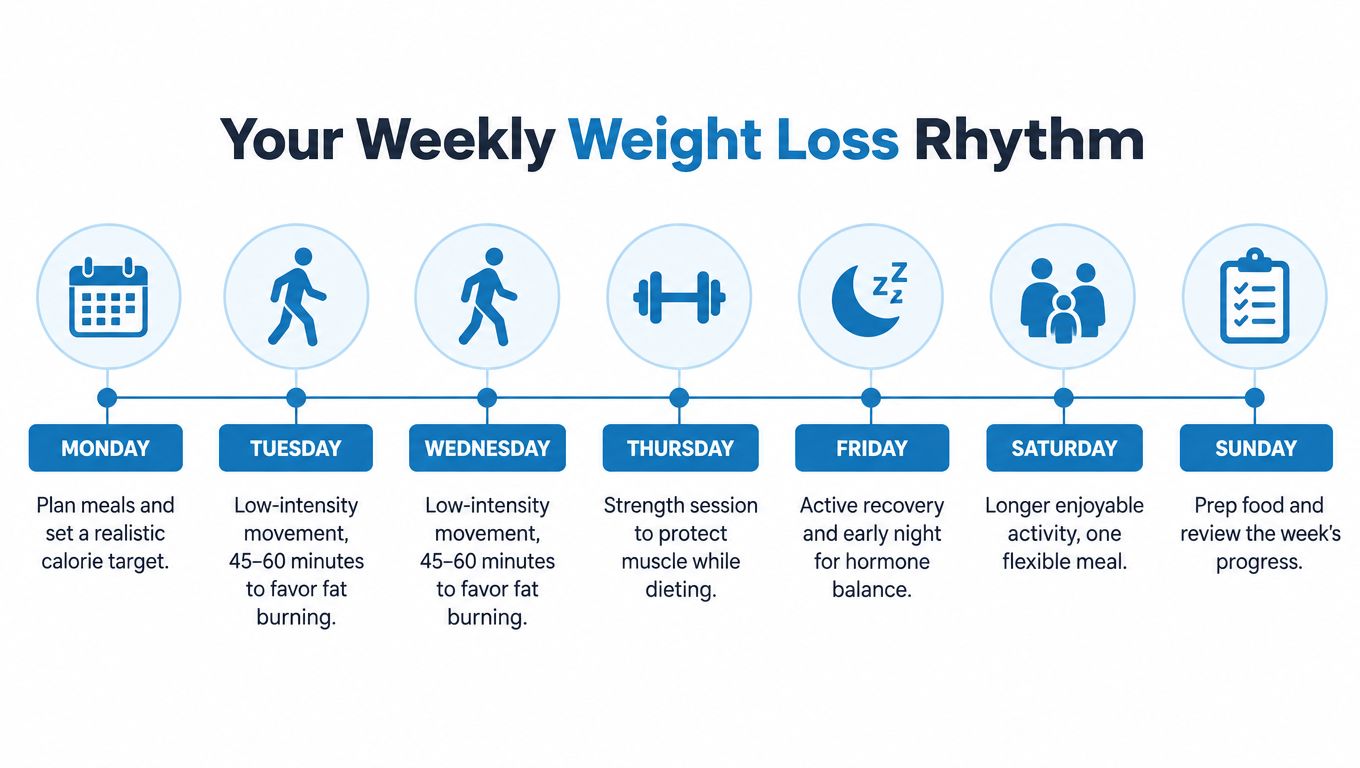
Use this rhythm as a template, then scale duration and intensity to your current ability:
- Monday: Plan meals, set a realistic calorie target, and complete a manageable aerobic session.
- Tuesday: Use low-intensity movement that you can sustain while speaking comfortably.
- Wednesday: Add a strength session or a shorter recovery-focused activity.
- Thursday: Complete another aerobic session, increasing duration only if recovery is good.
- Friday: Use active recovery, gentle mobility, or an easy walk.
- Saturday: Choose an enjoyable longer activity, with room for one flexible meal.
- Sunday: Prepare food, review adherence, and schedule the week ahead.
Make background activity count
Long, low-intensity sessions can accumulate meaningful expenditure without demanding the same recovery as repeated maximal intervals. BionicGym's Standard model is positioned for gentler sustained sessions, while PRO+HIIT is designed for more intense intervals. Any claimed outcome remains dependent on actual usage, diet, intensity, and individual response.
The concept of cumulative burn can be useful, but it shouldn't become permission to chase implausible numbers. The guardrail for long, low-intensity use allows for a possible 1,000 to 2,000 calories in one day in the appropriate context, while a typical vigorous level is about 500 calories per hour. Those are planning references, not guarantees.
For a deeper explanation of cumulative calorie burn for weight loss, consider how a few practical sessions might fit around work rather than assuming you need a single uninterrupted gym visit.
Tracking Progress Beyond the Scale
The scale records total mass, not fitness, muscle quality, motivation, or how easily you climb stairs. Daily readings also shift with water, food volume, sodium, and hormonal changes. Use weight as one signal, then track measures that show whether the plan is improving health and daily function.
Track the inputs first
During the first phase, record:
- Food and drink: Note portions, liquid calories, snacks, and meals eaten outside the home.
- Exercise dose: Log session type, duration, and perceived effort.
- Recovery: Record sleep quality, soreness, and fatigue that affects normal activity.
- Performance: Note walking pace, resistance, breathlessness, and recovery after effort.
Use the talk test to regulate moderate intensity. You should be able to talk, but not sing, during a moderate session, consistent with HSE physical activity intensity guidance. Vigorous work feels more demanding. Breathlessness and sweat offer practical feedback, although neither measure proves calorie expenditure.
Add functional markers
Resting heart rate, aerobic-capacity estimates such as VO2max, waist measurements, strength, and glucose readings may reveal progress that the scale misses. If you monitor glucose, review patterns with a qualified clinician, particularly if you use medication or have a diagnosed condition.
Anybody with a serious medical condition or injury should consult with their medical practitioner before starting any new exercise program.
Review records weekly rather than reacting to every meal or weigh-in. Look for trends across several measures. A smaller waist, better recovery, or improved walking pace can matter even when body weight is unchanged.
If adherence is high but progress has stalled, change one variable at a time, such as portion size, session frequency, or low-intensity background movement. That approach preserves a clear link between the adjustment and its result, while reducing the temptation to respond with a crash diet.
Maintaining Momentum Through Plateaus and Life Events
A plateau isn't proof that your body is broken or that you need a harsher diet. It may mean portions have drifted, activity has declined, water has changed, or your current intake now matches your expenditure. It may also mean the scale is failing to capture changes in waist size, fitness, or body composition.
Start with an audit rather than a panic response. Recheck drinks, weekend meals, cooking oils, snacks, and the exercise sessions that were planned versus completed. If the plan has become too demanding, reduce friction before reducing food. A shorter session you repeat is more valuable than an ambitious session you avoid.
Protect the routine during disruption
Work deadlines, illness, travel, and family events don't require a perfect week. Keep a minimum version ready:
- Busy day: Use a seated or home-based movement session if it can be performed safely.
- Travel day: Walk where practical and keep meals simple rather than attempting compensation.
- Low-energy day: Choose recovery movement and return to harder work when you're ready.
- Social day: Eat normally around the event instead of fasting aggressively and arriving ravenous.
- Interrupted week: Resume the next planned meal or session, without trying to punish the missed one.
Background activity has a particular advantage because it can occupy otherwise sedentary time. It doesn't remove the need for a calorie deficit, and it doesn't guarantee weight loss. It gives you another way to raise movement without making every session a major appointment.
People who are stuck on a weight plateau during perimenopause may need to consider sleep, stress, symptoms, medication, and changing recovery capacity alongside food and exercise. BionicGym is a great way to exercise. It is not a medical treatment. Consult your doctor if you have a serious condition.
The BionicGym plateau guidance is most useful when treated as a prompt to reassess adherence and progression, not as a promise of automatic results. A resilient plan combines a healthy diet, structured exercise, strength work, lower-intensity movement, and enough flexibility to continue through ordinary life.
BionicGym offers app-guided programmes and wearable leg wraps that deliver tuned electrical impulses, allowing seated or household activity to become structured exercise when used safely and consistently. Explore BionicGym alongside a realistic calorie deficit, conventional exercise where appropriate, and medical advice whenever a serious condition or injury is involved.