

Diet and Exercise Coach Guide to Smarter Results
You're at your desk, the kettle's gone cold, lunch was eaten in front of a screen, and the workout you meant to do keeps sliding to “later”. That's the world for a lot of people looking for a diet and exercise coach, because the issue usually isn't knowledge, it's fitting good habits into a day that already feels full. The right coach doesn't just hand out a meal plan or a training split, they help you make the two work together so the plan survives a busy week, not just a motivated Monday.
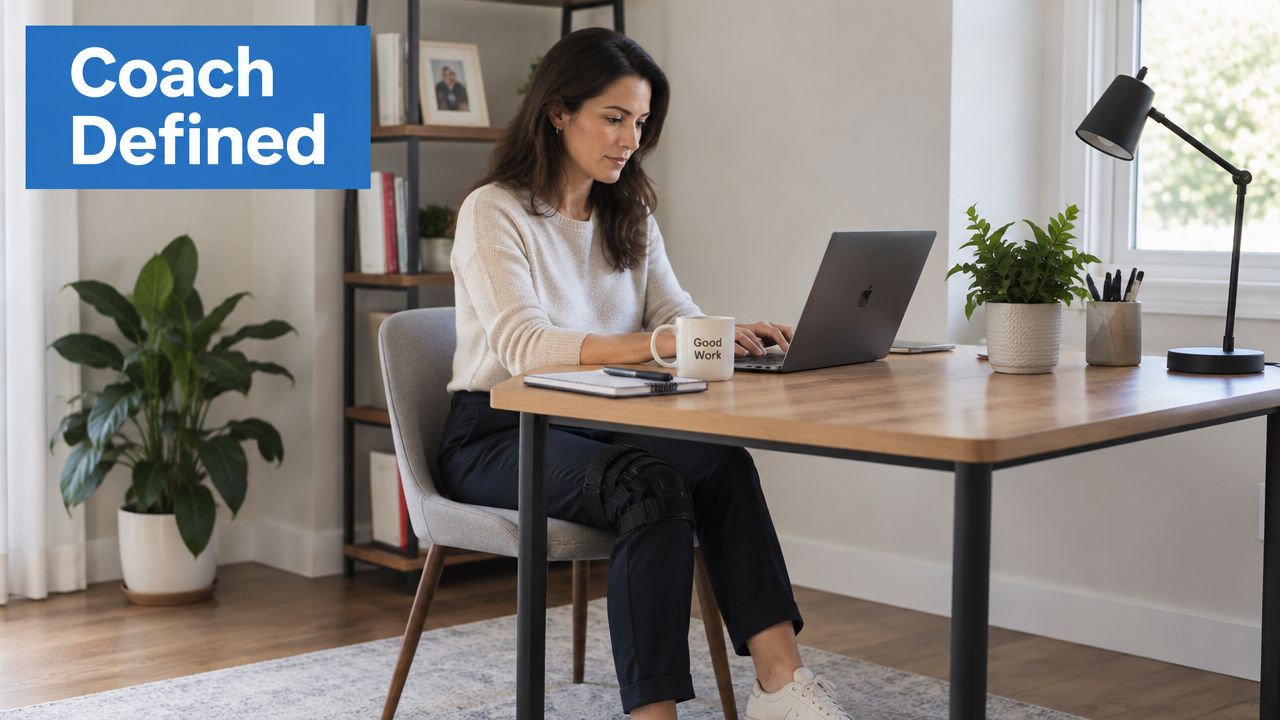
A good combined coach sits in the middle of two jobs. They're not a substitute for every kind of specialist, but they do bridge the gap between what you eat, how you move, and what you can keep doing next week. If you've ever tried to fix your food without changing your sitting time, or pushed exercise harder without adjusting meals and recovery, you've already felt why the two need to be coordinated. For a practical goal-setting framework that works well alongside coaching, see this guide to goal setting.
People sometimes expect a coach to “fix” results, but results depend on follow-through. A coach can design the plan, yet the plan still has to fit your routine, your joints, and your appetite. If you have a serious medical condition or injury, consult a medical practitioner before starting any new exercise programme.
Introduction What a Diet and Exercise Coach Actually Does
A diet and exercise coach helps you join up the two main levers of body composition and daily energy, what you eat and how you move. In plain language, they help you stop treating meals and exercise like separate jobs. For someone in a desk-based role who snacks out of habit, sits for long stretches, then tries to fix the week with one hard session, the problem is rarely effort. The routine is split, so the plan has little to hold onto.
A combined coach looks at the whole day. They may help with food choices, meal timing, training frequency, movement breaks, and habit design, while a nutritionist or dietitian may go deeper on clinical nutrition and a personal trainer may go deeper on programme delivery. The point is simple. Meals should support training, training should support recovery and appetite control, and both should fit the way you live. For a practical guide to the planning side of coaching, see consulting coaching call handling.
Practical rule: if a plan cannot survive a normal workday, it is probably too fragile to rely on.
Ireland's guidance gives that idea a clear shape. For adults aged 18 to 64, the national guidance recommends 2 hours 30 minutes to 5 hours of moderate-intensity aerobic activity or 1 hour 15 minutes to 2 hours 30 minutes of vigorous-intensity aerobic activity, plus muscle-strengthening work on 2 or more days weekly (gov.ie physical activity guidelines). That matters because vague advice like “move more” does not help a desk-bound person shape the week. A coach turns broad guidance into something you can do, track, and repeat.
The sitting-heavy workday is the test. A plan may look tidy on paper, but if it falls apart by Thursday, it was never built for real life. Coaching works when it respects that reality and still gives you clear targets.
A simple way to understand the role is this. If someone wants to lose fat, feel less stiff, and stop crashing at 3 p.m., the coach may start by adjusting breakfast, putting movement breaks between meetings, and placing training around the day instead of waiting for spare time to appear. That is coaching in practice, practical and specific. For readers who want a wider view of planning habits and progress, this goal-setting guide is a useful companion.
If you are comparing nutrition structure with training consistency, the combination matters more than any single tactic. diet PLUS exercise gives the coach more tools, and it gives you more ways to stay on track. If you have a serious medical condition or injury, consult a medical practitioner before starting any new exercise programme.
How Combined Nutrition and Exercise Coaching Works Together
A desk-bound day can make the body feel like a house with the lights on but very little power going to the right rooms. Food, movement, sleep, and stress all affect the same system. If one part is off, the others have to work harder.
A good coach starts with that basic reality, then shapes it around the person. Meals, training load, recovery, and long stretches of sitting all need to fit together. Food should support training, training should help appetite control and muscle maintenance, and both should fit a week you can repeat. For readers who want a practical example of that join-up, this sustainable-weight-loss note shows how diet and exercise are meant to work as a pair.
What the plan usually has to cover
A workable plan usually needs three parts.
- Fuel for the session. Meals should match the kind of training being done, rather than fight it.
- Recovery after the session. The body adapts between sessions, not during them.
- Daily structure. If sitting dominates the day, movement has to be built in on purpose.
That third part matters a lot in Ireland, because many people spend long hours at a desk or in meetings. The HSE says replacing sedentary time with movement brings health benefits, and people with extended sitting time should aim to be active at a moderate to vigorous level for at least 60 minutes daily when daily routine involves extended sitting time greater than 8 hours (HSE physical activity evidence). A coach uses that idea to break the day into smaller pieces, like short walking breaks, brief strength work, and training placed around the workday instead of waiting for one perfect free slot.
If a plan only works on a quiet calendar, it is too fragile for real life.
Concrete targets help here. “Get fitter” is vague. “Train three times a week, walk after lunch, and keep weekdays less sedentary” gives a coach something to check and adjust. If food planning needs to match your own routine rather than a template, you can get a personalized nutrition plan.
Combined coaching also looks for mismatches. If training goes up while meals stay too light, recovery tends to suffer. If meals are loosely managed while exercise is inconsistent, progress stalls. The point is to keep the two sides moving together, so effort on one side is not cancelled out on the other.
That balance matters most on ordinary days, not perfect ones. A coach is trying to make the plan hold up when work is busy, the commute is long, and sitting has taken most of the day.
How to Choose the Right Diet and Exercise Coach for You
A good coach is not the person with the busiest feed or the slickest promises. It is the person whose skills match your goal, your schedule, and any joint or health limits you already know about. If your main problem is desk-bound eating and workouts that keep getting skipped, you need someone who can handle habit design and exercise progression together, because diet and movement work like two sides of the same cart. If one wheel is wobbly, the whole thing becomes hard to push.
Compare what actually matters
Start with credentials, then look at fit. A coach may know fitness well and still be the wrong choice if they do not understand your lifestyle. Specialties matter. Someone who mainly works with endurance athletes will coach differently from someone who works with busy professionals, older adults, or people who need low-impact options.
Communication style matters too. Some people need regular check-ins and direct accountability. Others do better with lighter contact and self-tracking. If you know you will ignore a plan unless it appears on your phone, app-based support may suit you better than an occasional call.
Ask whether the coach can explain the plan in plain language. If the answer is wrapped in jargon, that is usually a bad sign.
Red flags are easier to spot once you know what to avoid. Be cautious if someone promises miracle results, guarantees weight loss, or never asks about medical history, pain, or current activity level. Be cautious as well if the plan is extreme, disconnected from your workday, or built around one rigid approach for everyone.
The table below gives a simple filter you can use before a discovery call starts to sound persuasive.
Diet and Exercise Coach Comparison Checklist
| Criteria | What Good Looks Like | Red Flag |
|---|---|---|
| Credentials | Qualifications that match nutrition or fitness work | No clear training or vague claims |
| Specialities | Experience with your goals and lifestyle | Generic advice for everyone |
| Coaching Style | Supportive, accountable, adaptable | One-size-fits-all pressure |
| Communication | Regular check-ins by app, video, or in person | Hard to contact, no feedback loop |
| Safety Screening | Asks about pain, conditions, and limitations | Skips health history entirely |
A few questions can save a lot of disappointment. Ask how they adjust plans for busy weeks, how they handle eating patterns that change on workdays, and what they do when a client has joint discomfort. Ask how progress is measured besides body weight, because that shows whether they understand behaviour change or just chase short-term scale changes.
For a desk worker, I would also want to know whether the coach understands sitting time and movement breaks. That is a practical test, because someone who cannot design around your real day will probably hand you a plan that is awkward to follow. If you want a simple external benchmark for step-based habits, the the BionicGym goal-setting guide is a useful reference point for the kind of planning a good coach should be able to apply.
You can shorten the decision process by asking yourself three things. Does this coach understand my schedule? Do they make clear, safe recommendations? Can they explain how diet and exercise fit together without hype? If the answer is no on any of those, keep looking.
Why Desk Bound Days Make Coaching Essential in Ireland
A desk-bound workday can make good intentions disappear fast. You leave home meaning to move more, then meetings, emails, commuting, family duties, and another hour at the screen fill the day before exercise ever gets a chance.
Ireland's activity picture explains why coaching has to be practical, not motivational theatre. The Healthy Ireland Survey 2024 found that only 41% of people reported meeting the national guideline of at least 150 minutes of moderate activity per week, while 8% reported doing no physical activity in the previous seven days (Ireland factsheet). The same factsheet showed that 62% of people aged 15 to 24 met the guidelines, compared with 19% of those aged 75 and older. That gap matters because a coach has to work with the day a person has, not the one they wish they had.
The problem is sitting, not just awareness
The bottleneck is not awareness of exercise benefits. The harder part is fitting movement into a day that already leans heavily toward sitting.
The HSE has pointed to research showing that many adults in Ireland spend long stretches in sedentary activity, and that not everyone meets recommended activity levels (HSE adult activity guidance). Earlier Irish Sports Monitor reporting also showed a spread across sedentary, fairly active, and highly active groups. The exact year matters less than the pattern, because the pattern keeps showing up.
That is why motivation alone usually falls short. A person can fully understand the value of exercise and still lose the day to deadlines, commuting, childcare, and screen time. Coaching becomes useful when it answers a more practical question, how do you make movement happen inside a sitting-heavy routine so it repeats without constant willpower?
The HSE evidence on physical activity says replacing sedentary time with movement brings health benefits, and that long sitting blocks should be broken up rather than left untouched until one perfect workout slot appears. A coach uses that idea to shape the week, not just the gym session.
Desk workers often need a different kind of support. A coach who understands “exercise on autopilot” can help build repeatable movement prompts, walking breaks, and sessions that do not depend on a full gym setup. For a practical example of how to approach step targets in a workday, desk job step goals is a useful reference.
For readers who want a coaching approach built around sedentary professionals, this desk-worker exercise guide gives another useful angle. BionicGym can fit into that kind of plan as a way to add movement on days when sitting time keeps winning the schedule. The point is simple. Habit design beats hype when the chair keeps calling.
Inside a Typical Diet and Exercise Coaching Workflow
A good coaching workflow starts before the first workout. The intake should cover eating patterns, training history, pain points, work schedule, sleep, and the things that usually knock the plan off course in real life. That screening matters because the answer to “what should I do?” changes if someone has stiffness, a desk job, or a run of inconsistent training behind them.
After that, the coach turns the information into priorities. One client may need steadier meal timing. Another may need fewer long sitting blocks and more short bursts of movement through the day. The best plans feel specific without becoming complicated enough to need a spreadsheet every day.
What good delivery looks like
A practical workflow often looks like this.
- Assess first. The coach asks what your current week looks like, not what you hope it will look like.
- Set one or two priority habits. That might be protein at breakfast, a walk after lunch, or scheduled exercise on set days.
- Match training to recovery. The programme should suit your joints, energy, and available time.
- Track more than scale weight. Consistency, energy, training completion, and sitting-time breaks matter too.
- Adjust weekly or fortnightly. The plan should change if your routine changes.
That rhythm matters because coaching works like a feedback loop. If the plan is too hard, the client disappears. If it is too soft, nothing changes. A coach keeps adjusting the load and the habits until they are hard enough to matter and simple enough to repeat.
Where the sitting breaks fit
For desk workers, timing is often the tricky part. A coach does not wait for the end of the day and hope a long workout will fix everything. Movement gets placed earlier and more often, so it can survive meetings, commuting, and a tired evening. That approach fits guidance that says extended sitting should be broken up, especially when the day keeps stretching into one long chair-bound block (ICGP type 2 diabetes practical guide). The same guide advises adults with diabetes to perform at least 150 minutes per week of moderate-intensity aerobic activity and resistance training at least twice per week, which also gives a useful model for anyone who wants clear weekly targets.
A coach should explain why each part of the plan is there. That makes it easier to stick with the habits when work gets messy. If you know whether a habit supports energy, recovery, or adherence, it becomes easier to keep the parts that work and change the parts that do not. For readers who want a tool-based example of structured exercise delivery, this BionicGym update on EMS muscle stimulation shows how guided sessions can be framed in practice.
Integrating BionicGym Into a Diet PLUS Exercise Plan Safely
A sitting-heavy workday can make exercise feel like a second job. BionicGym fits into that gap as a wearable cardio system that can sit inside a broader diet PLUS exercise plan, so movement can happen during ordinary parts of the day instead of waiting for a perfect free hour. It was invented and developed by a medical doctor, and it is described as an FDA-cleared device, not an FDA-approved one.
The useful way to judge it is not by hype, but by fit. For many desk-bound people, the question is whether the device helps create repeatable activity on days that are otherwise full of sitting, short breaks, and tired evenings.
The output should also stay realistic. A trained user may reach a lower level of about 500 calories per hour, and longer, lower-intensity sessions can build meaningful energy use over the day. That only matters if the device is used consistently and the food side of the plan is kept steady. Diet and exercise work like two sides of the same coin, if one side slips, the whole plan loses shape.
Where it fits, and where it doesn't
BionicGym can make sense for low-impact use because it does not ask the joints to absorb the same load as conventional cardio. That is helpful for people who want a gentler entry point, or who need exercise to fit around work, family, and a desk-based routine. It can also sit alongside low-risk tasks such as watching TV, answering emails, or tidying around the house.
Safe use still comes first. Do not use it while driving, crossing roads, going up or down steps, or handling dangerous objects. In practice, that means treating it like a quiet training tool for predictable settings, not something to wear anywhere and forget about.
Medical condition disclaimer: BionicGym is a great way to exercise. It is not a medical treatment. Consult your doctor if you have a serious condition.
For anyone with joint sensitivity, Ireland's guidance is a useful reality check. Arthritis Ireland says low-impact exercise is usually most suitable because it puts less weight or force through the joints, and it lists walking, swimming, cycling, yoga, Tai Chi, Pilates, and dancing as examples (Arthritis Ireland exercise guidance). The HSE also advises people with arthritis to use water-based or low-impact activities when knees and hips are stiff, and to avoid vigorous activity during a flare-up while staying active where possible (HSE arthritis advice). That is why any coach-led plan has to respect pain, load, and recovery, not just calorie burn.
For weight loss, the main point stays simple. Diet PLUS exercise works better than either one alone. The BionicGym weight loss calculator is useful as a planning tool because it pushes the focus toward weekly behaviour, not wishful thinking. If you want a plain explanation of the device itself, this EMS overview gives the wider context.
Your Next Steps to Start Coaching With Confidence
Start with a goal you can measure. If you want fat loss, better energy, or less stiffness from sitting, write down the habits that support that result, not just the result itself. A first coaching session should cover your work pattern, meals, movement, and any joint issues, so the plan fits your life instead of fighting it.
If you are comparing coaches, ask practical questions. How do they handle long desk-based days? What do they do when training weeks change? How do they check for pain or medical concerns? If you have a serious condition or injury, consult your doctor before starting any new exercise programme.
For people with joint sensitivity, lower-impact movement is often the better starting point. Walking, swimming, cycling, yoga, Tai Chi, Pilates, and dancing are all commonly used options, and the point is simple, the plan should match what your joints can handle today. That flexibility matters because good coaching keeps the routine usable when your body or calendar changes.
Keep the diet side honest too. Use the weight loss guidance for busy professionals as a reminder that the plan has to fit the workday, not fight it. If you want weight loss to last, track what you do each week, adjust the load when needed, and choose the routine you can repeat on a tired Thursday as well as a fresh Monday.
For desk-heavy days, structure matters more than willpower. BionicGym can fit into a diet PLUS exercise plan without needing a full gym session, which makes it a practical way to add movement into hours that would otherwise be spent sitting. Treat it like part of the weekly routine, then build your coaching plan around what you can repeat.